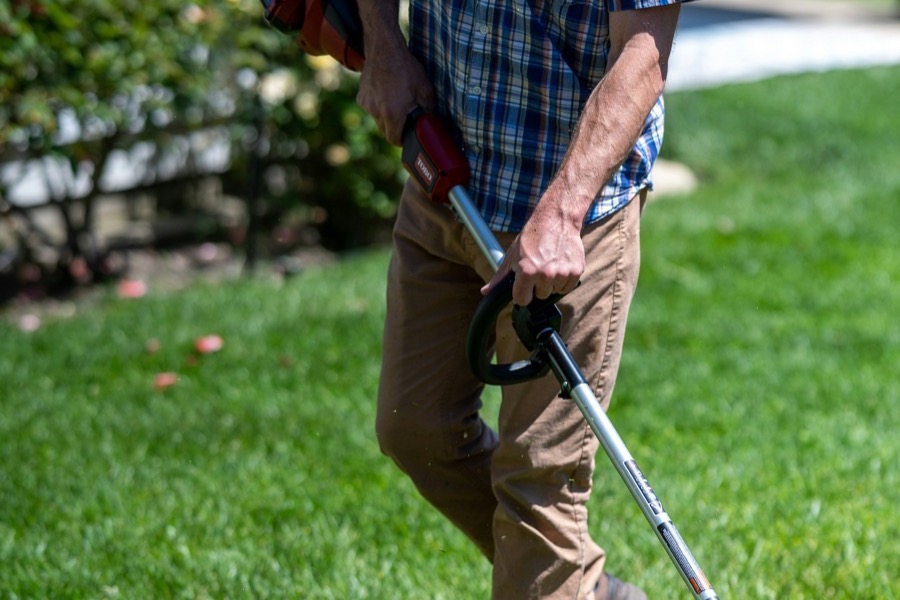
Lawn care and seasonal maintenance
Weekly cutting, spring and fall feeding, aeration and weed control on a set schedule from April to November.
Joint sand, weeds and ants, sealing and the small frost-heave repairs that keep an existing paved surface serviceable.
This page is about keeping paving that already exists rather than building new. Most Kanata driveways and rear patios laid between the late 1980s and the 2010s have reached the stage where the joints have emptied, the edge courses have crept outward and an area or two lifts every spring and settles again by June. None of that needs a rebuild. All of it needs attention before it does.
Step one: find out whether it is the surface or the base. Press a foot on a loose paver. If the stone rocks but the area around it is flat and firm, the bedding sand has washed out locally and it is a small repair. If a whole area has dished, or water now runs toward the house, the base has failed or the grade has moved, and relaying that section is the only real fix. A contractor solving a dished area with more joint sand is selling you a season.
Step two: joints, which are the whole maintenance story. Joint sand holds the pavers in interlock with each other, which is where the name comes from. Empty joints let stones move, let water into the bedding layer and let weeds and ants settle in. Refilling means cleaning the joints out first, sweeping in new sand, compacting so it settles, then topping up again. Polymeric sand binds when wetted and lasts longer, and it is less forgiving: swept incompletely off the paver faces before watering, it sets as a haze that is tedious to remove.
Step three: weeds and ants, which are a symptom. Weeds in paving germinate in the joint sand and the organic matter collecting on it, not from below, and ants nest in dry loose sand. Both say the joints are empty. Keeping the surface blown clean and the joints full does more than any spray, and spraying is limited anyway: Ontario's cosmetic pesticide ban permits only Class D products and Allowable List actives (Ontario), and applying for hire needs an exterminator licence with an operator licence behind it (Ontario).
Step four: spot re-levelling. A sunken or rocking area is lifted by hand, the pavers stacked in order, the bedding sand screeded back to a consistent 25 to 40 mm, the stones relaid to the original pattern and the joints refilled and compacted. It is fiddly rather than difficult, and the quality shows in whether the repair finishes flush with what surrounds it. Ask to see a previous repair rather than a new installation.
Step five: sealing, which is optional and often oversold. A sealer darkens the colour, helps hold joint sand and makes oil and salt easier to wash off. It does not stop settlement or frost heave, and it needs redoing every three to five years. On a surface already moving it is money spent on appearance. Seal a sound surface for the look, and skip it otherwise.
Timing. Joint sand and re-levelling need dry weather and a surface that has finished its spring movement, so late May through October is the window and September the best month. Polymeric sand needs a dry day with no rain during the cure. Nothing useful happens in April.
What it costs in Ottawa in 2026. Indicative ranges. A full clean and re-sand of a two-car driveway is commonly $400 to $900, depending on whether polymeric sand is used. Spot re-levelling of a small sunken area is often $300 to $800. Lifting and relaying a whole driveway on its existing base is commonly $20 to $40 per square metre, and if the base has to be rebuilt it becomes a new installation rather than maintenance. Sealing is often $4 to $9 per square metre. What moves the number: area, sand removal, cuts and curves, and access for a plate compactor.
Why Kanata paving moves the way it does. Frost, unevenly. Where Kanata Lakes and Morgan's Grant sit on shallow soil over limestone, the base bears well on rock but drains poorly in pockets, so movement is local and one section lifts in an otherwise sound driveway. On the marine clay lower down the clay swells wet and shrinks dry (NRC), and whole areas rise and fall seasonally. Ploughs and salt do the rest: a blade catches a lifted edge course and drags it, and salt spalls older unsealed pavers.
Where this stops being maintenance. Two boundaries. Changing the hard surface where the driveway crosses the City road allowance needs a permit to construct, relocate, alter or close a private approach under By-law 2003-447 (City of Ottawa), so widening is a permit question rather than a repair. And a retaining wall over 1 m next to public property, next to building access, or on private property open to the public needs a building permit, with steps, landings and guards meeting the Building Code (City of Ottawa).
Licences and credentials. No licence exists for paving work in Ontario and it is not a compulsory trade (Skilled Trades Ontario). Insurance and a WSIB clearance number valid up to 90 days are the practical checks (WSIB).
What to ask before you hire. Is this a surface problem or a base problem, and how do you know. Are you cleaning the joints out before re-sanding. Plain sand or polymeric, and why. Will the repair finish flush, and can I see a previous one. Is sealing included, and what does it do for me. Do you carry insurance and WSIB. A contractor who cannot say whether the movement is surface or base cannot price the job honestly.
Free written quote. We call back the same business day.
Lawn care, sod, hedge trimming, garden beds, interlock upkeep, seasonal clean-ups and snow contracts in Kanata, and the rules that apply first.
Weekly cutting, spring and fall feeding, aeration and weed control on a set schedule from April to November.
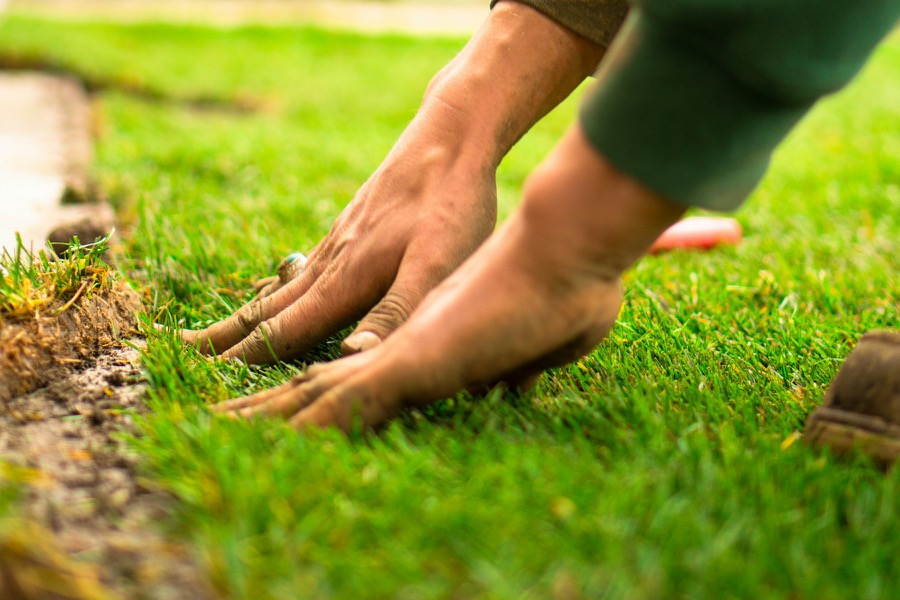
New sod, patch repairs and overseeding, with the grading and drainage sorted out before the turf goes down.
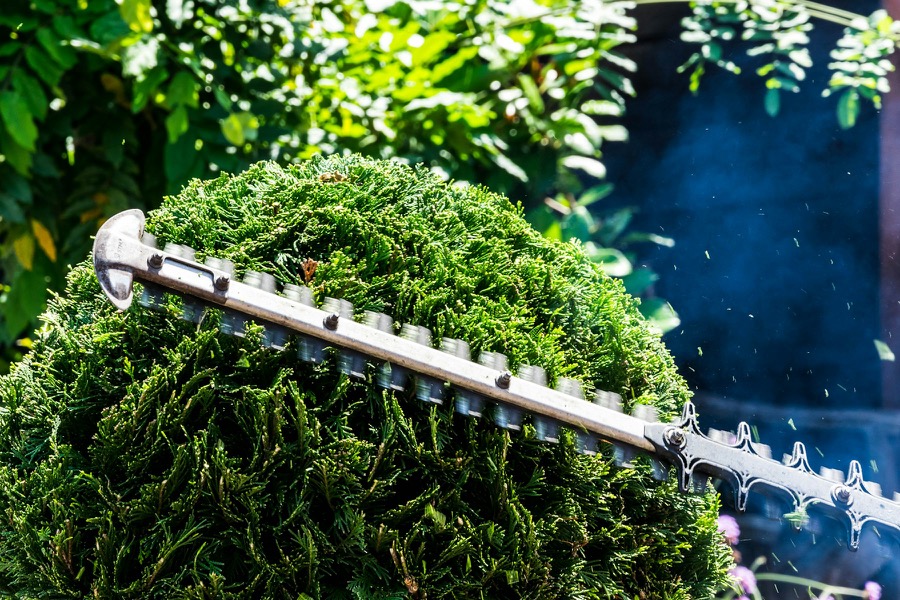
Cedar hedges, foundation shrubs and small ornamental trees cut back on the right schedule, inside the City's tree rules.
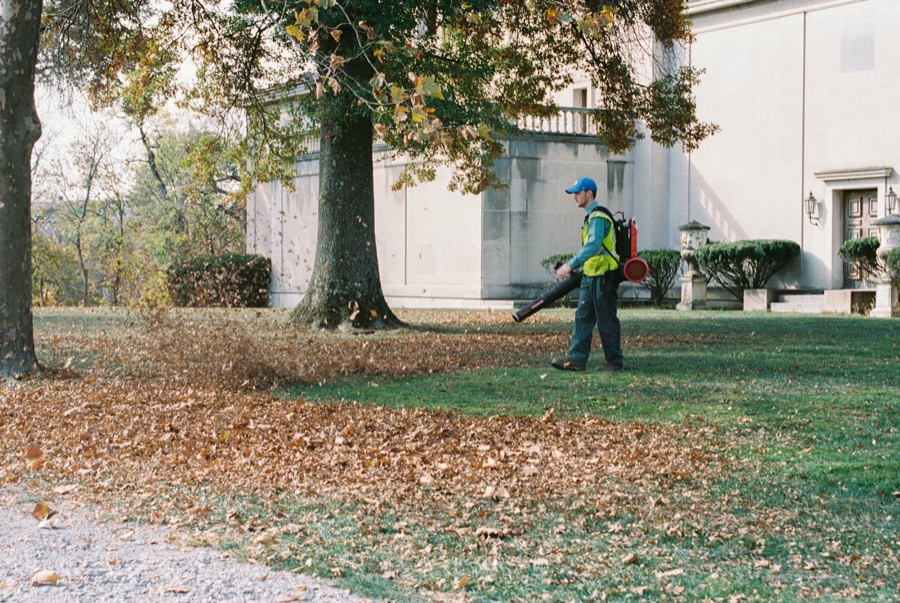
The two visits that bracket the season: winter damage cleared in April, leaves and beds put to bed in October.
Seasonal driveway and walkway contracts for Kanata homes and small commercial sites, and how to read one before you sign.
Weeding, edging, mulch, perennial care and the rebuild of a bed that has outgrown its space.
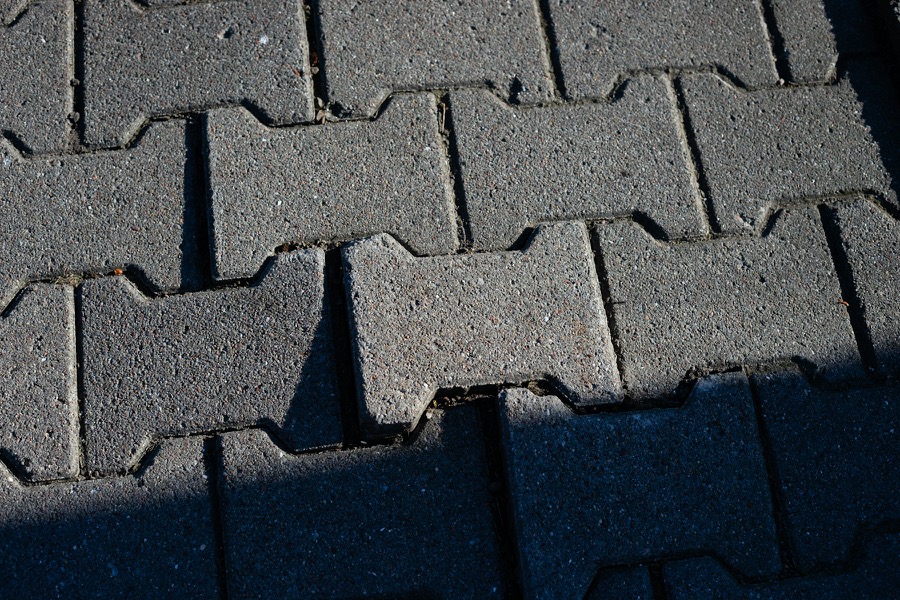
Joint sand, weeds and ants, sealing and the small frost-heave repairs that keep an existing paved surface serviceable.